
Discover why mock tests are
essential for AAI JE Airport Operations 2026 preparation. Learn how Full Mock
Tests and Sectional Tests help improve speed, accuracy, time management,
question selection and exam confidence. Career Wave and Satyendra Sir explain
the right Mock → Analyse → Improve → Retest strategy for better performance.
Preparing for AAI JE Airport Operations 2026 is not just about completing lectures, making notes and solving chapter-wise questions. At some point, every aspirant needs to answer a more important question:
You may know the concepts. You may have completed the syllabus. You may even solve questions correctly during practice. But the real examination brings everything together—speed, accuracy, recall, time management, question selection and pressure handling.
This is why mock tests should not be treated as something to attempt only after preparation is complete.
At Career Wave, Satyendra Sir recommends using mocks as an active part of preparation. A good mock test does not simply give you a score. It tells you where you are losing marks and what you need to improve before the actual exam.
There is a major difference between:
and
Scoring well in that subject under a time limit.
During normal study, you can pause, check notes, reconsider a calculation or spend extra time on a difficult question.
During the examination, you have to make decisions quickly.
Mock tests help bridge this gap.
Students often judge preparation based on syllabus completion.
For example:
But syllabus completion does not automatically mean exam readiness.
A mock test checks whether you can actually:
Your mock performance gives a much more realistic picture than simply counting completed chapters.
Without tests, students often study according to assumptions.
You may think Mathematics is weak but discover that your real problem is Aviation Awareness.
You may think Reasoning is strong but discover that you are taking too much time.
You may understand Business Management concepts but repeatedly confuse similar definitions.
Mocks convert these assumptions into measurable information.
After every test, ask:
That subject should influence your next revision plan.
Knowing the answer is not enough if you spend too much time reaching it.
Suppose a student can solve almost every Mathematics question but spends excessive time on calculations.
Another student may know Reasoning well but gets stuck on one lengthy problem.
These habits can reduce the final score.
Mocks help you learn:
Time management is difficult to develop through theory classes alone.
It requires repeated timed practice.
One of the most underrated competitive-exam skills is knowing:
A difficult question can consume the time required for several easy questions.
During mocks, classify questions mentally:
This habit becomes faster with repeated testing.
Speed is not developed simply by trying to solve every question faster.
Good speed comes from:
After enough mock practice, familiar question patterns start becoming easier to recognize.
Instead of thinking for 30 seconds about which method to use, you may identify it almost immediately.
That is practical exam speed.
Speed without accuracy has limited value.
A student may attempt many questions but lose marks because of:
Mock analysis helps identify exactly why incorrect answers occur.
Once you know the reason, you can work on removing that category of mistake.
Some of the most frustrating errors happen when the student actually knows the concept.
Examples include:
These mistakes are difficult to identify through normal study.
Mocks expose them repeatedly.
Once a pattern becomes visible, it can be corrected.
Physics, Mathematics and Aptitude require quick recall.
During normal revision, a formula may appear familiar because you are looking directly at your notes.
In a mock, there is no such support.
You have to retrieve it from memory.
That makes mocks an excellent test of whether your formulas are actually exam-ready.
If you repeatedly forget a formula during tests, add it to your priority revision list.
Business Management and Aviation Awareness can create a false sense of confidence.
Students read a chapter and feel:
Then they encounter two very similar options in an MCQ.
That is when conceptual precision matters.
Mock tests reveal whether you can differentiate between closely related concepts rather than merely recognize familiar words.
A sectional test may last for a relatively short period.
A full mock requires sustained concentration across different subjects.
You may move from:
Business Management → Aviation → Reasoning → Quantitative Questions → English → GA
The mental switching itself requires practice.
Full-length mocks train you to remain focused throughout the paper.
The actual examination should not be the first time you experience:
Mocks allow you to experience these situations before the real exam.
The more familiar the process becomes, the easier it is to focus on the questions rather than the environment.
There is no universal strategy that works equally well for every student.
One aspirant may perform better starting with Reasoning.
Another may prefer Business Management.
Someone else may begin with their strongest section to build momentum.
Mocks allow you to experiment safely.
Try different sequences and compare:
Then choose the strategy that works best for you.
Full mocks are important, but sectional tests have a different role.
A Sectional Test helps improve a particular subject.
A Full Mock checks whether all your preparation works together.
For example, if your Aviation Awareness score is consistently low:
Once the section improves, check whether that improvement reflects in the next full mock.
This creates a complete improvement cycle.
A common student statement is:
This can become a trap.
Competitive preparation rarely feels 100% complete.
If you keep waiting, you may enter the final phase without enough testing experience.
Start sectional tests as subjects progress.
Introduce full mocks once you have sufficient syllabus coverage.
Preparation and testing should eventually run together.
Many students become uncomfortable after a low mock score.
They start thinking:
Then they stop giving mocks until they “prepare better.”
This removes one of the most useful sources of feedback.
A low score before the exam is valuable if you analyse why it happened and correct it.
Finding weaknesses during a mock is much better than discovering them in the actual examination.
One test cannot define your preparation.
A paper may be relatively difficult.
A particular section may contain topics you have not revised recently.
You may simply have had a poor test.
Instead of focusing on one score, track your performance across multiple mocks.
Look for trends in:
Progress is better measured through trends than through one isolated result.
Attempting 30 mocks without proper analysis can be less useful than attempting 15 mocks carefully.
After every mock, spend time understanding:
This is where the mock becomes a learning tool.
After completing a mock, classify questions into four groups.
You knew the concept and solved it correctly.
Your answer was correct, but you were unsure.
These questions still need revision.
Identify the exact reason for the mistake.
Determine whether you left the question because of:
This method gives a much deeper analysis than simply checking the score.
At Career Wave, Satyendra Sir recommends maintaining a subject-wise record of recurring mistakes.
Your notebook can contain:
Aviation Awareness: Organizations, abbreviations, codes and terminology
Reasoning: Pattern-recognition and logical errors
English: Grammar and vocabulary errors
General Awareness: Incorrect or outdated facts
Revise this notebook before your next major mock.
Create a simple performance table:
|
Mock |
Score |
Attempts |
Correct |
Wrong |
Accuracy |
Weakest Area |
|
Mock 1 |
— |
— |
— |
— |
— |
— |
|
Mock 2 |
— |
— |
— |
— |
— |
— |
|
Mock 3 |
— |
— |
— |
— |
— |
— |
After several tests, patterns become visible.
You can then make study decisions based on data rather than assumptions.
After completing and analysing a test, ask:
Suppose your analysis shows:
Too many concept-confusion errors.
Action: Revise definitions + sectional test.
High accuracy but low speed.
Action: Timed practice.
Poor recall.
Action: Short-note revision + MCQs.
Careless mistakes.
Action: Accuracy-focused practice.
This is how mocks create a data-driven preparation strategy.
This approach is inefficient:
A better approach is:
Every new mock should test whether the weaknesses identified in the previous one have improved.
Otherwise, you may simply repeat the same mistakes in different papers.
Suppose your full mock reveals that one subject is pulling down your score.
Do not necessarily take another full mock immediately.
Use targeted sectional practice.
For example:
Weak Subject Identified → Concept Revision → Sectional Test → Error Analysis → Second Sectional → Full Mock
This is one of the most efficient ways to use a test series.
Competitive exams are psychological as well as academic.
Suppose the first few questions in the actual exam appear difficult.
Some students panic and carry that stress into the next section.
Regular full mocks teach you:
One difficult question does not mean the paper is difficult.
One bad section does not mean the exam is lost.
One mistake should not affect the next question.
This mental discipline can directly influence performance.
As the examination approaches, mocks become even more valuable.
They help identify what actually needs final revision.
Instead of randomly revising the entire syllabus, focus on:
This makes final revision much more targeted.
Use a short pre-mock checklist:
Then attempt the mock seriously.
Do not casually start a full mock while distracted.
Treat it as an exam simulation.
Follow this sequence:
Step 1: Check overall score.
Step 2: Check subject-wise performance.
Step 3: Identify incorrect questions.
Step 4: Review doubtful correct answers.
Step 5: Check unattempted questions.
Step 6: Identify time-consuming questions.
Step 7: Update your error notebook.
Step 8: Create the next revision plan.
That is a complete mock-analysis cycle.
For structured exam-oriented practice, Career Wave’s AAI AO Test Series 2026 provides:
The objective is not simply to give students more questions.
The objective is to help aspirants test, analyse and improve their performance systematically.
AAI AO Test Series 2026:
Career Wave AAI AO Test Series 2026
At Career Wave, the recommended approach is simple:
Study → Practise → Mock → Analyse → Correct → Revise → Retest
Do not measure progress only by the number of lectures watched or PDFs completed.
Measure it by questions such as:
Do not use mocks only to predict your final marks.
Use them to increase your final marks.
As Satyendra Sir at Career Wave advises:
Your mock score is not the final result. It is feedback showing what you still have time to improve.
YouTube: Career Wave YouTube
Telegram: Career Wave Telegram
Instagram: Career Wave Instagram
Facebook: Career Wave Facebook
AAI AO Test Series 2026: Full Mock Tests + Sectional Tests
Career Wave — AAI Exam Preparation with Satyendra Sir
 What Can We Learn from Career Wave's Selected AAI ATC Students? Success Stories...
23 Nov 2026
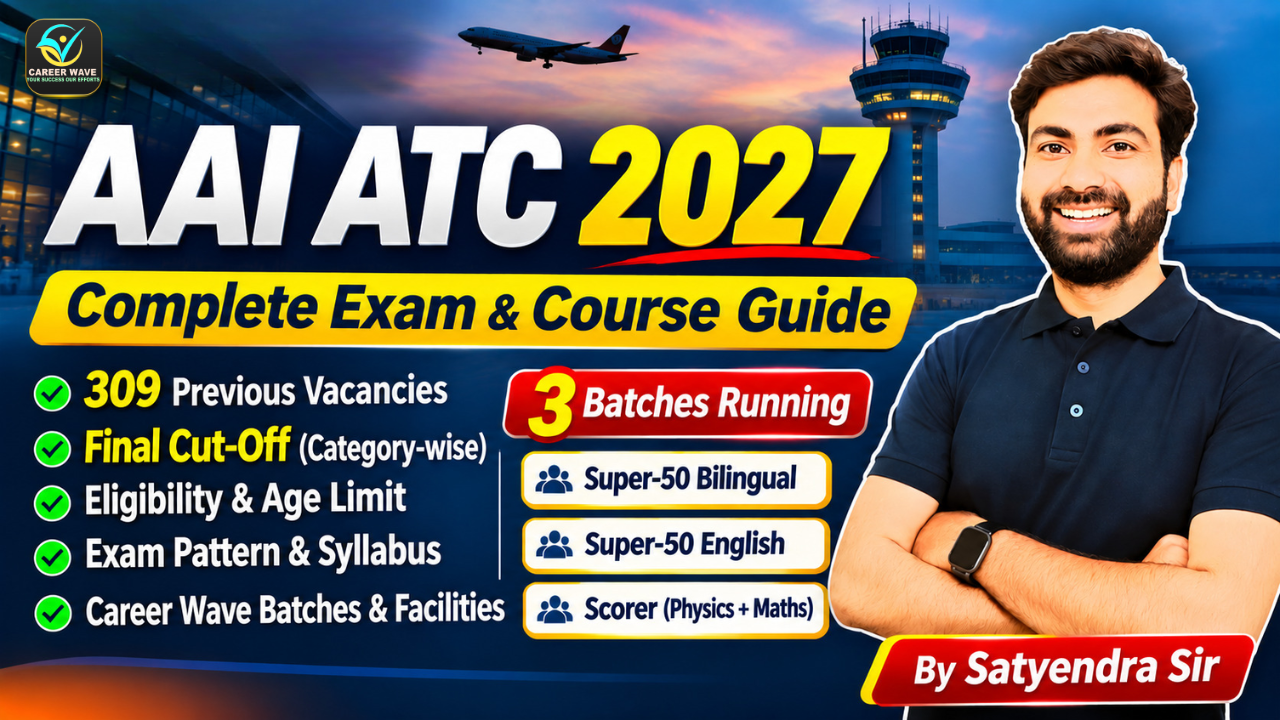 AAI ATC 2027: Notification, Eligibility, Syllabus, Exam Pattern, Salary, Cut-Off...
23 Nov 2026
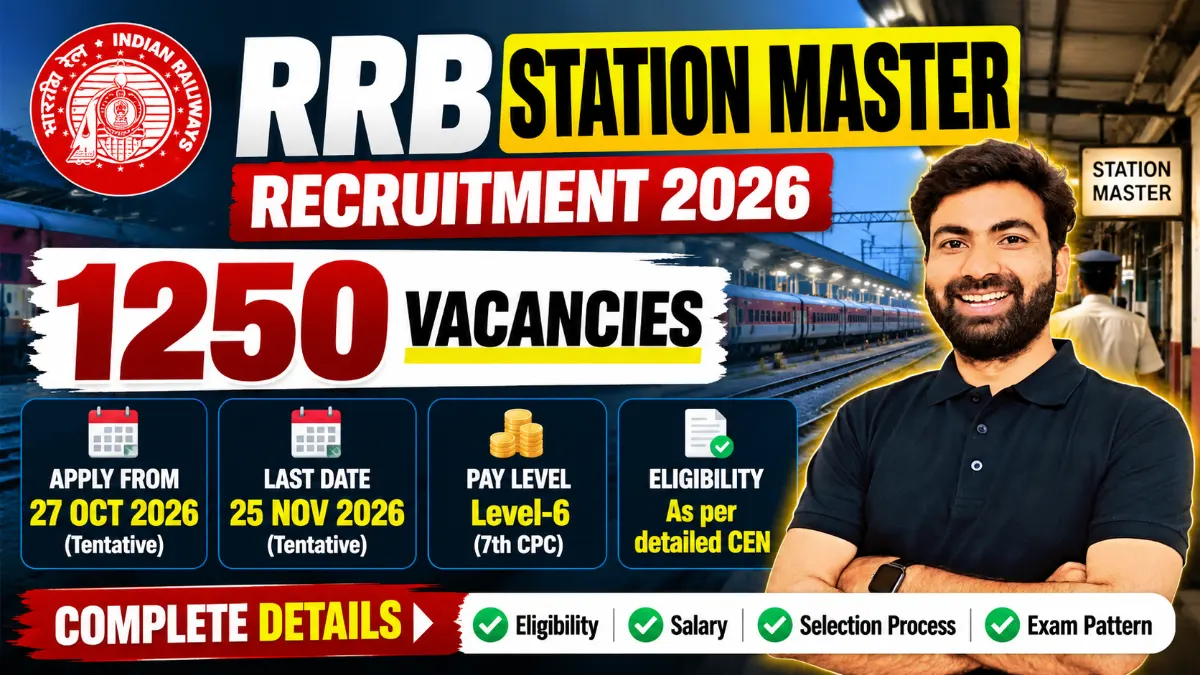 RRB Group D Score Card 2026 and ALP CBT-1 Answer Key: Score, Cut-off and Next St...
22 Nov 2026
 AAI JE AO 2026 Answer Key: Status, Score Calculation, Paper Analysis and Expecte...
22 Nov 2026
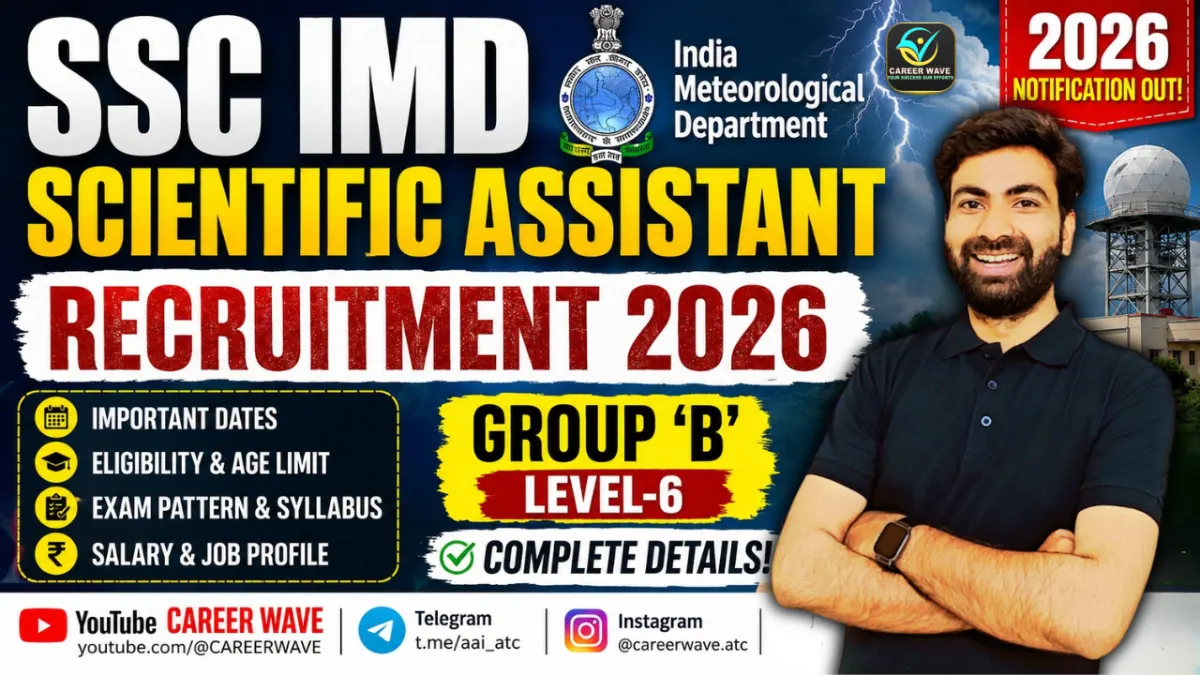 SSC JE 2026 IMD Scientific Assistant Answer Key: Score Calculation, Objections a...
22 Nov 2026
 B.Sc vs B.Tech for AAI ATC 2027: Best Preparation Strategy for Each
19 Nov 2026
Leave a Comment
23-Nov-2026 02:05 PM
What Career Wave's selected AAI ATC students did differently: real testimonials, PYQ and mock-test methods, a 6-month plan and mistakes to avoid in 2027.
23-Nov-2026 01:23 PM
AAI ATC 2027 guide: notification status, eligibility, age limit, exam pattern, syllabus, salary, 2025 cut-offs and Career Wave’s 3 live batches compared.
22-Nov-2026 03:58 PM
RRB Group D score card is out till 1 Dec and ALP CBT-1 objections are closed. Check your score, qualifying marks, PET standards and next...
22-Nov-2026 11:51 AM
AAI JE Operations 2026 answer key status, how to calculate your score out of 120, the 26 Oct paper analysis and the expected cut-off of...
22-Nov-2026 11:23 AM
SSC JE 2026 Paper-I answer key for IMD Scientific Assistant is out. Learn how to calculate your score, raise objections before 22 Nov 6 PM...
19-Nov-2026 03:50 PM
B.Sc vs B.Tech: Who has an advantage in AAI ATC 2027? Discover the right preparation strategy for B.Sc Physics, B.Sc Mathematics and Engineering graduates. Compare...
 Career WaveOn WhatsApp
36,000+ learners · 4.8★ on Google