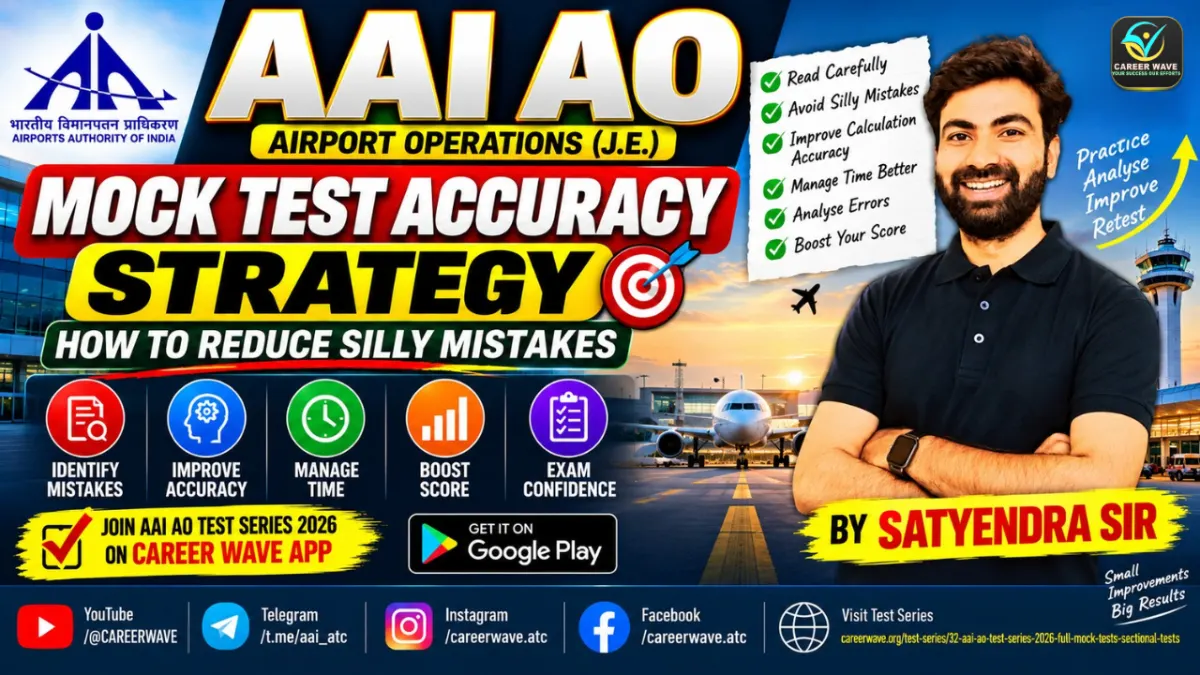
Learn how to improve accuracy in
AAI JE Airport Operations 2026 mock tests and reduce silly mistakes. Career
Wave and Satyendra Sir explain practical strategies for better question
reading, calculation accuracy, time management, error analysis, sectional
practice and smarter mock attempts.
You complete an AAI JE Airport Operations mock test, check the result and discover something frustrating:
Sometimes the calculation was correct but the wrong option was selected. Sometimes you missed words like NOT, INCORRECT, EXCEPT or CORRECT. Sometimes you changed a correct answer because of unnecessary doubt.
These are commonly called silly mistakes, but when the competition is close, they are not small mistakes.
At Career Wave, Satyendra Sir emphasizes a simple principle:
Improving your score does not always require learning more. Sometimes you need to stop losing marks on questions you already know.
This is where mock-test accuracy becomes important.
Accuracy tells you how efficiently your attempts are converting into correct answers.
A simple way to track it is:
For example:
If you attempt 100 questions and 85 are correct:
But do not look only at the percentage.
You should also identify why the remaining questions went wrong.
That analysis is where improvement begins.
Most avoidable errors come from a few recurring habits:
The first step is not simply to “be more careful.”
The first step is to identify your specific mistake pattern.
Related: Common Mistakes Students Make While Solving AAI AO PYQs 2026Every incorrect answer should be classified.
Use categories such as:
You did not understand or remember the concept.
You selected or recalled the wrong formula.
Your approach was correct, but arithmetic went wrong.
You misunderstood or skipped an important word.
You solved correctly but selected another option.
You attempted without sufficient confidence.
You rushed because too little time remained.
Once errors are classified, your improvement plan becomes clearer.
Many students start solving before finishing the question.
This is especially risky when the final line changes what is being asked.
Words that deserve special attention include:
Train yourself to notice these words automatically.
One missed keyword can turn complete knowledge into a wrong answer.
For direct questions, understand what is being asked before getting influenced by the options.
Sometimes closely related options create unnecessary confusion.
First ask:
Then compare your expected answer with the available choices.
This is particularly useful in theoretical areas such as:
In Mathematics, Physics and Aptitude, students sometimes confuse speed with rushing.
Good speed means:
It does not mean writing every step as quickly as possible.
For calculation-heavy questions:
1. Identify the required quantity.
2. Select the correct formula or method.
3. Substitute carefully.
4. Calculate.
5. Check whether the answer is reasonable.
6. Select the option.
A few extra seconds of verification can prevent an avoidable error.
Physics questions can become incorrect even when the formula is right.
Common problems include:
Before finalizing a numerical answer, ask:
This should become automatic.
Whenever possible, develop an approximate expectation of the answer.
Suppose your calculation gives an unexpectedly huge or tiny value.
Instead of immediately marking the option, ask:
Approximation acts as an internal error detector.
It is especially useful for identifying:
Some students solve a question correctly and then repeatedly calculate it again.
This consumes time and can create fresh confusion.
Use verification selectively.
Recheck when:
Do not repeatedly verify every straightforward question.
A common mock-test mistake is:
Change an answer only when you have identified a concrete reason, such as:
Do not change an answer merely because another option suddenly “looks better.”
After answering, mentally classify your response:
During mock analysis, check whether low-confidence attempts are actually helping your score.
This reveals whether your instinctive attempts are productive or simply increasing errors.
Instead of fighting every question in sequence, use rounds.
Attempt questions where:
Return to questions requiring:
This protects both speed and accuracy.
Suppose you spend several minutes on a difficult problem and still cannot solve it.
Students often carry that frustration into subsequent questions.
The result:
One difficult question causes multiple careless errors.
Develop an exit rule.
If you cannot identify a reasonable solution path within your planned time:
Protecting the rest of the paper is more important than defeating one difficult question.
Your correction strategy should also be subject-specific.
Watch for:
Watch for:
Watch for:
Watch for:
Watch for:
Watch for:
Watch for:
Watch for:
Do not maintain only a general error notebook.
Create a specific section called:
For example:
|
Question Type |
Mistake |
Correction |
|
Physics Numerical |
Forgot unit conversion |
Check unit before substitution |
|
Maths |
Calculation error |
Recheck final arithmetic |
|
Business Management |
Confused two definitions |
Revise comparison |
|
Aviation |
Similar abbreviation |
Add to revision list |
|
Reasoning |
Missed condition |
Read all statements first |
|
English |
Ignored context |
Read complete sentence |
|
GA |
Confused fact |
Revise source notes |
Before every major mock, revise this list.
Overall accuracy can hide important problems.
Suppose:
That may appear reasonable.
But subject-wise analysis could reveal:
Now your preparation direction becomes obvious.
Track accuracy at both:
This is often ignored.
Some answers are correct only because:
These are unstable correct answers.
During analysis, divide correct responses into:
and
Review the doubtful ones.
Otherwise, they may become wrong in the actual exam.
Many silly mistakes appear in the later part of a full-length test because mental fatigue increases.
To reduce this:
Concentration is also an exam skill.
It improves through practice.
If you attempt a mock while:
then the score does not accurately represent your exam readiness.
Whenever possible, full mocks should simulate actual examination conditions.
The closer your practice environment is to the exam environment, the more useful your performance data becomes.
After every wrong answer, ask:
Do not accept:
Write the actual reason:
This makes the problem actionable.
One calculation error can happen.
But if similar calculation errors appear in five mocks, that is no longer random.
It is a pattern.
Your mock analysis should identify:
Repeated mistakes deserve immediate attention because they are likely to appear again in the actual exam.
At Career Wave, Satyendra Sir recommends following a simple cycle:
↓
↓
↓
↓
↓
↓
This makes improvement measurable.
Suppose your Business Management accuracy is consistently low.
Do not simply attempt another full mock.
Instead:
Analyse Errors → Revise Concepts → Attempt Business Management Sectional Test → Analyse Again
Similarly, if Mathematics errors are calculation-based:
Sectional tests allow focused correction.
One dangerous mindset is:
A better objective is:
Attempt count is useful only when those attempts convert into marks.
During practice, monitor whether increasing attempts improves or reduces your effective score.
Do not force speed too early.
First build:
Then:
Then:
Then:
Students who force speed before accuracy often develop careless habits that become difficult to remove later.
A mock score alone tells you very little.
Suppose you scored 75.
You need to know:
This data tells you what to do next.
At Career Wave, this is a major part of Satyendra Sir's mock-test strategy:
Mocks are not only tests. Mocks are feedback.
Suppose your avoidable errors look like this:
Even before a dramatic score increase appears, this is meaningful progress.
Your objective should be to gradually reduce:
This creates a more stable final score.
To practise this strategy, aspirants can use the Career Wave AAI AO Test Series 2026.
The test series includes:
The objective is not just to attempt more questions.
It is to understand your performance and systematically improve it.
AAI AO Test Series 2026:
Career Wave AAI AO Test Series 2026
Before moving away from a question, ask:
Improving your AAI AO mock score does not always mean studying another chapter.
Sometimes the quickest improvement comes from protecting the marks you are already capable of scoring.
Focus on:
Read Carefully → Solve Correctly → Verify Smartly → Analyse Errors → Avoid Repetition
Do not aim for a “perfect mock.”
Aim to make fewer avoidable mistakes in every new mock.
At Career Wave, Satyendra Sir recommends treating every silly mistake as data. If the same mistake appears repeatedly, identify the pattern and correct the underlying habit before the actual examination.
YouTube: Career Wave YouTube
Telegram: Career Wave Telegram
Instagram: Career Wave Instagram
Facebook: Career Wave Facebook
AAI AO Test Series 2026: Full Mock Tests + Sectional Tests
Career Wave — AAI Exam
Preparation with Satyendra Sir
 What Can We Learn from Career Wave's Selected AAI ATC Students? Success Stories...
23 Nov 2026
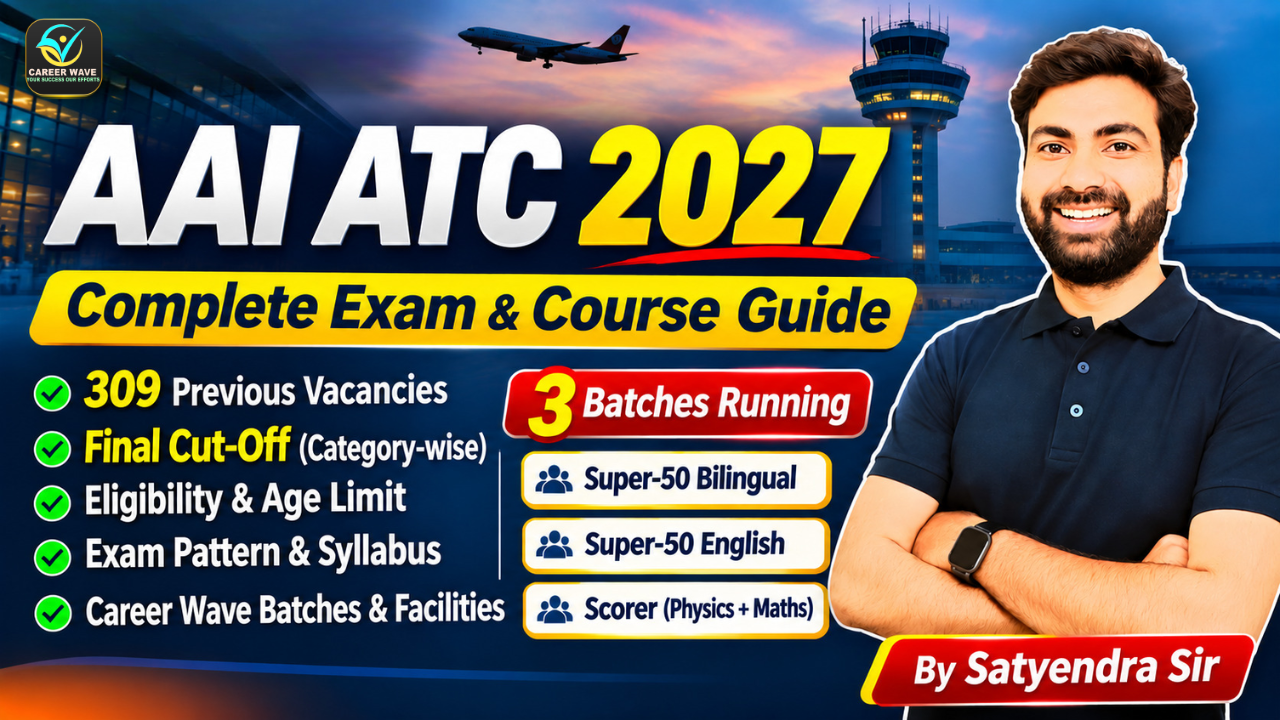 AAI ATC 2027: Notification, Eligibility, Syllabus, Exam Pattern, Salary, Cut-Off...
23 Nov 2026
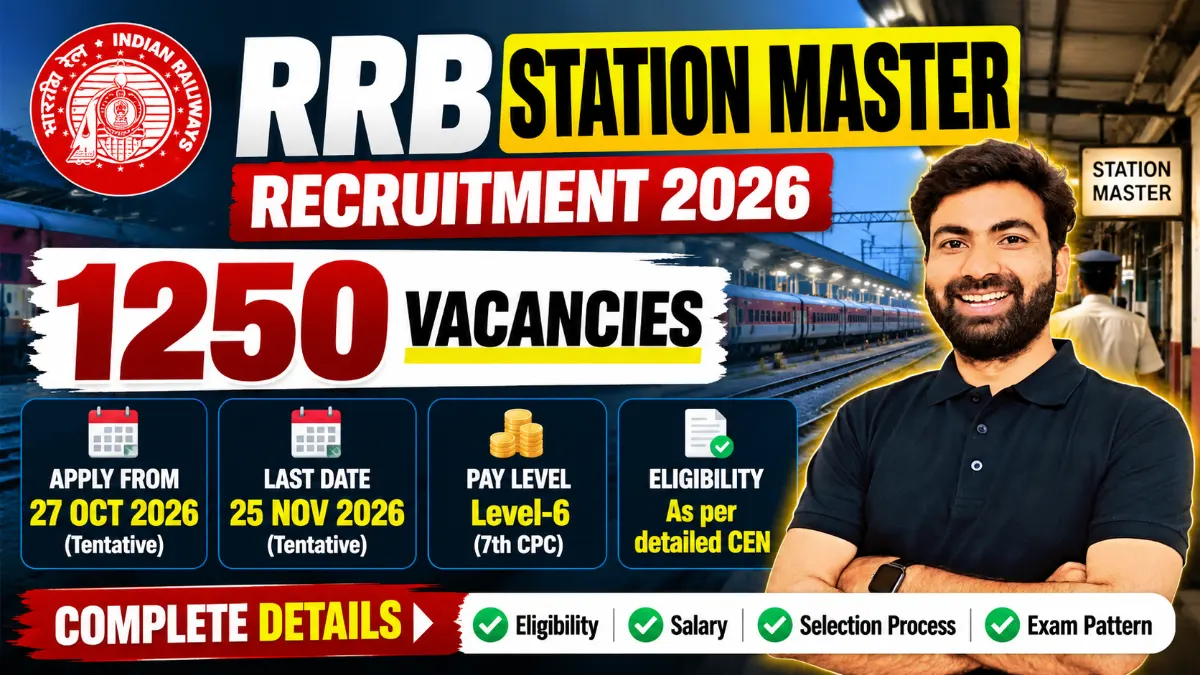 RRB Group D Score Card 2026 and ALP CBT-1 Answer Key: Score, Cut-off and Next St...
22 Nov 2026
 AAI JE AO 2026 Answer Key: Status, Score Calculation, Paper Analysis and Expecte...
22 Nov 2026
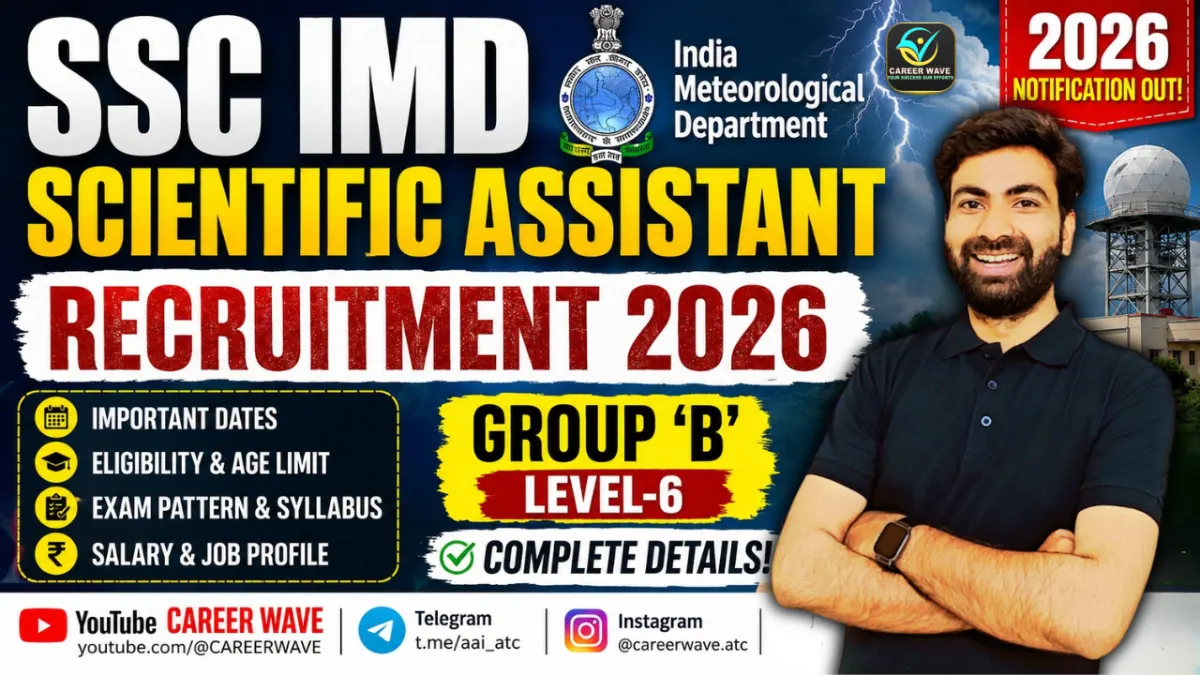 SSC JE 2026 IMD Scientific Assistant Answer Key: Score Calculation, Objections a...
22 Nov 2026
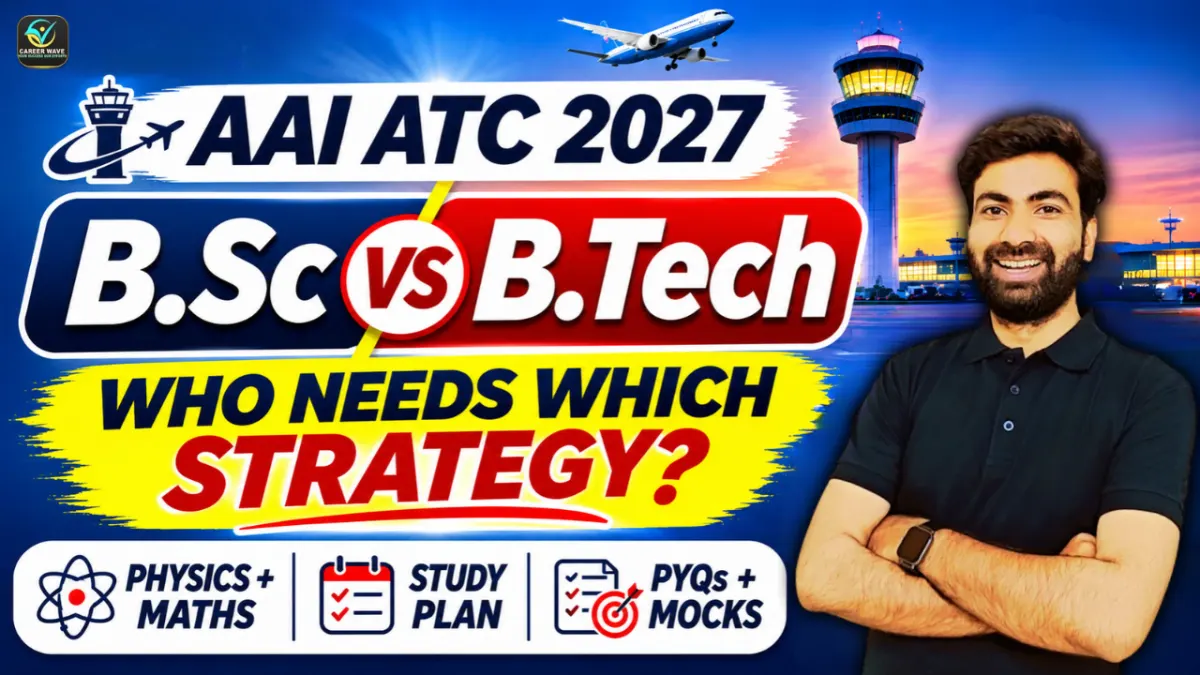 B.Sc vs B.Tech for AAI ATC 2027: Best Preparation Strategy for Each
19 Nov 2026
Leave a Comment
23-Nov-2026 02:05 PM
What Career Wave's selected AAI ATC students did differently: real testimonials, PYQ and mock-test methods, a 6-month plan and mistakes to avoid in 2027.
23-Nov-2026 01:23 PM
AAI ATC 2027 guide: notification status, eligibility, age limit, exam pattern, syllabus, salary, 2025 cut-offs and Career Wave’s 3 live batches compared.
22-Nov-2026 03:58 PM
RRB Group D score card is out till 1 Dec and ALP CBT-1 objections are closed. Check your score, qualifying marks, PET standards and next...
22-Nov-2026 11:51 AM
AAI JE Operations 2026 answer key status, how to calculate your score out of 120, the 26 Oct paper analysis and the expected cut-off of...
22-Nov-2026 11:23 AM
SSC JE 2026 Paper-I answer key for IMD Scientific Assistant is out. Learn how to calculate your score, raise objections before 22 Nov 6 PM...
19-Nov-2026 03:50 PM
B.Sc vs B.Tech: Who has an advantage in AAI ATC 2027? Discover the right preparation strategy for B.Sc Physics, B.Sc Mathematics and Engineering graduates. Compare...
 Career WaveOn WhatsApp
36,000+ learners · 4.8★ on Google